Why choose Reunion Island as your next destination?
Reunion is synonymous with trekking; a trip to the island is unthinkable without exploring it on foot.
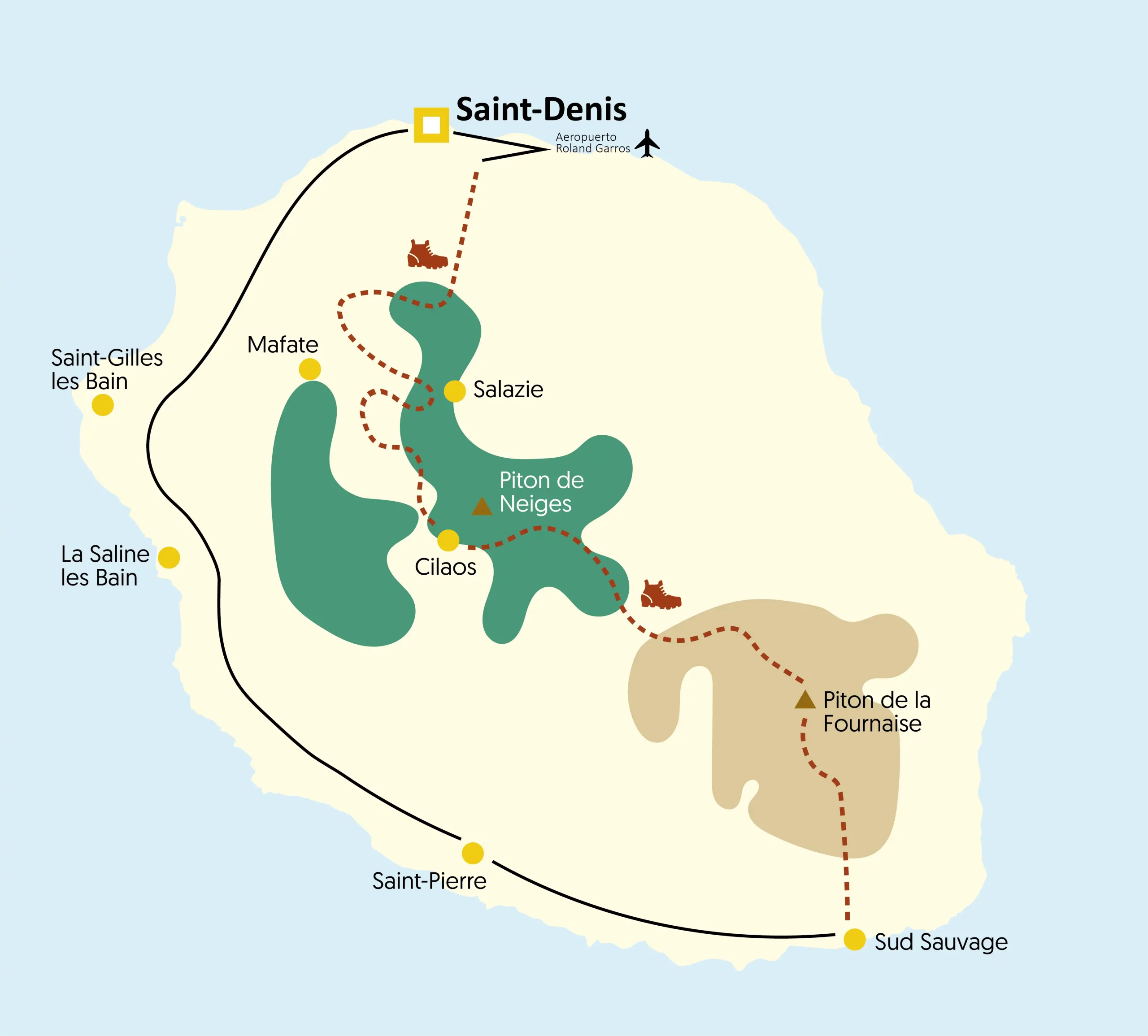
All of Réunion’s mountains are UNESCO World Heritage Sites, covering 40% of the island. Most of the trails involve ascents and descents in the famous cirques and peaks such as Piton des Neiges, Piton Maïdo, Cirque de Mafate, Piton de la Fournaise, and more.
Discover Reunion Island and enjoy the full experience
Located in the heart of the Indian Ocean, in the Mascarene archipelago, Reunion Island is home to one of the world’s most active volcanoes, Piton de la Fournaise, as well as an extinct volcano, Piton des Neiges, the island’s highest point. Reunion Island also boasts incredible flora and fauna around the cirques of Mafate, Salazie, and Cilaos, as well as magnificent beaches.
A crossroads of European, Malagasy, Indian, Asian, and African civilizations, Réunion is a melting pot of islands. Its current population is the result of centuries of migration, the fruit of a unique ethnic mix. Its inhabitants today form a mixed-race and pluralistic people, who have become a model of multicultural and multiethnic coexistence.
Lunar landscapes and adventure-filled trails
La Réunion is an active, “intense” island, so you can enjoy a whole range of sports and family leisure activities, from extreme to relaxing, all year round and in complete safety through breathtaking landscapes by land, sea, and air: canyoning, paragliding, trekking, mountaineering, touring the island by buggy, diving, mountain biking, horseback riding, helicopter flights, whale watching.
When is the best time to travel to Reunion Island?
Although Reunion Island is an ideal place to travel at any time of year, it is worth noting that there are two distinct seasons.
The island can be divided into two climate zones:
The western part is sheltered from the wind and has a drier, more pleasant climate practically all year round.
The eastern part is more exposed to the wind and influenced by its proximity to the intertropical convergence zone. Trade winds blow from the east to the southeast and bring more abundant rainfall.
Summer: November to April
The climate is hot and humid during these months, with peak temperatures in December, January, and February exceeding 30°C on the coast. In general, the highest rainfall occurs in February and March. The cyclone season runs from December to March. This season is notable for its lush vegetation.
Winter: May to October
The temperature is cooler during this season, between 22º and 24ºC on the coast. Inland, in the heart of the mountains, temperatures range between 5º and 15ºC.
As for temperatures at altitude, they can reach 0°C and rarely exceed 25°C in the height of summer. Above 1,800 meters, in July and August, frosts are frequent at night, with the thermometer even dropping below zero on some of the peaks.
The average temperature in Saint Denis, which is at sea level, is 24°C in August and 30°C in February. The average temperature in Plaine des Palmistes (1,200 meters) is 17°C in August during the day and 24°C in February.
An unusual phenomenon on a tropical island: it can snow in Réunion! It did so in 2003 and 2006 on Piton des Neiges and Piton Maïdo.
How can I get to Réunion Island from Spain?
With Air Austral. The national airline is considered one of the best African airlines. It has an excellent fleet of aircraft and will take us to Réunion via Paris or from Johannesburg, an interesting option for all travelers coming from Latin America. We can also travel with Air France, Corsair, French Bee, and Air Mauritius.
We organize your trip to Reunion Island so you don’t have to worry about a thing.
Reunion is a small island but has a lot to offer. However, we only recommend it if you want to go hiking, trekking, or active tourism. We consider a minimum of 8 days on the island to be necessary. If you want to do some of our treks such as the GR2, you should plan for a minimum of 13/14 days.
The TREK GR R2 is the result of our love of traveling on foot. A real challenge that requires excellent physical condition and a great spirit of sacrifice. This trek is considered one of the most beautiful in the world.
We put our extensive knowledge of the island at your disposal to design or advise you on the trip that best suits your travel preferences. To get your trip right, take the time you need and keep in mind that this is a trekking and hiking destination, not a beach destination.